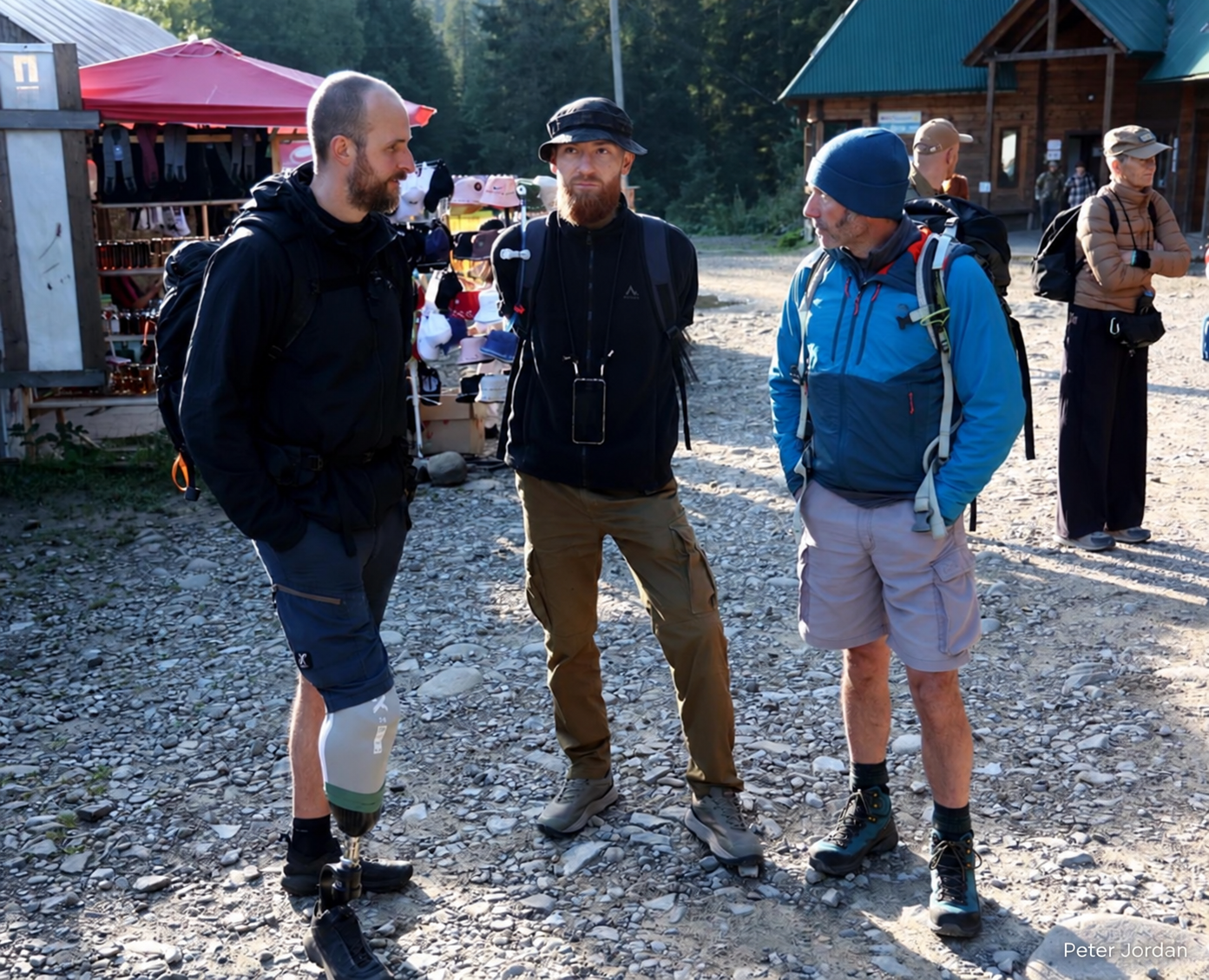
I was invited to Ukraine to climb Mount Hoverla alongside a group of Ukrainian veterans living with life changing injuries. It was an honour to be asked and a privilege to spend time with them, hear their stories and stand beside them on their country’s highest mountain.
We arrived as former British service personnel, but the connection between us was immediate. Different uniforms, different wars and different injuries mattered less than the shared understanding of what service can demand and what life asks of you afterwards. The mountain gave us a meaningful objective and allowed friendship and honest conversation to develop naturally, in a way that would have been difficult to reproduce in a more conventional setting.
A mountain with a deeper purpose
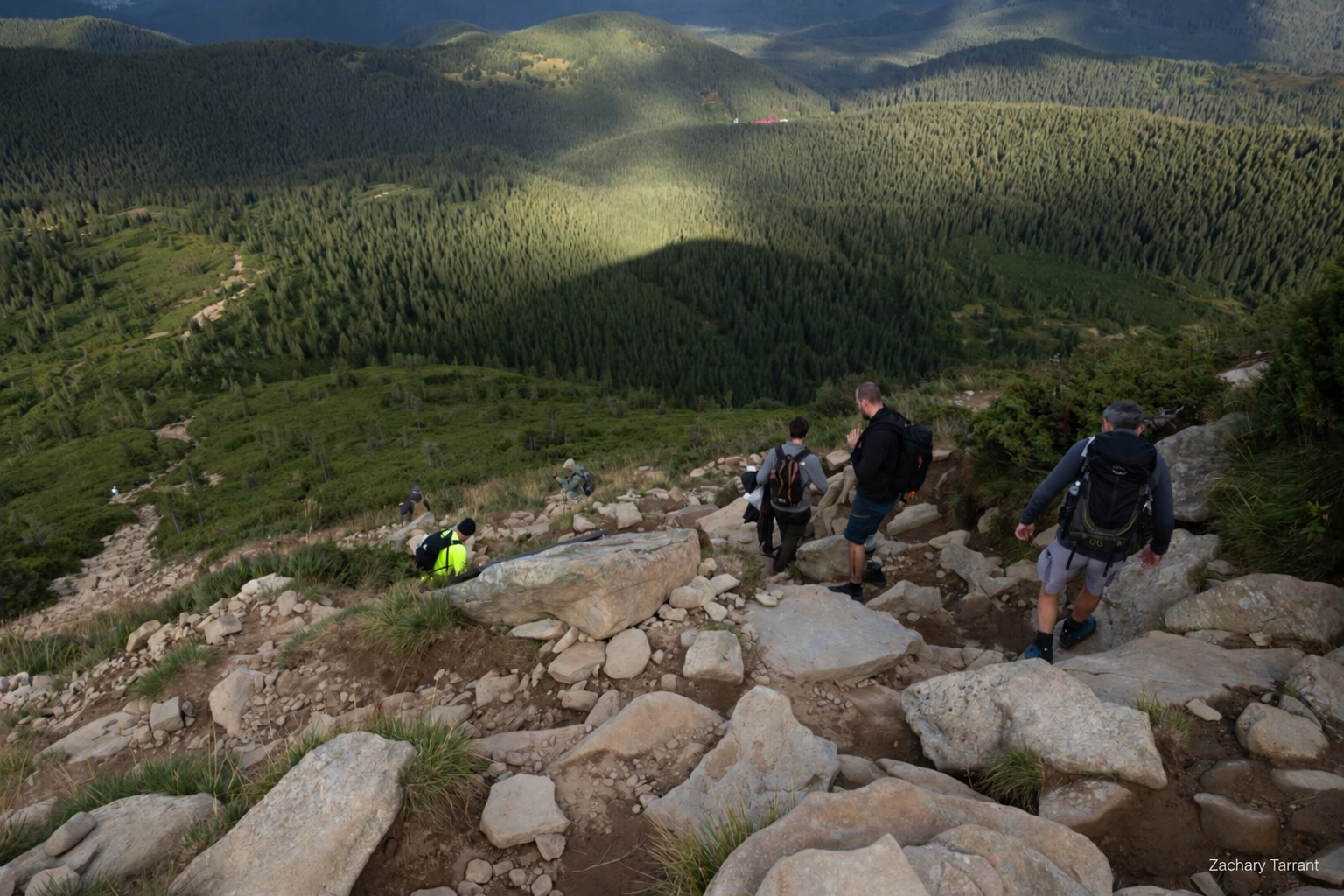
Hoverla rises to 2,061 metres in the Ukrainian Carpathians. Yet the height was only part of the challenge. For the men climbing that day, every step carried the reality of injuries sustained in the continuing defence of their country.
Among them was Oleksii, an above knee amputee whose injury makes steep mountain movement exceptionally demanding. He climbed to just below the summit. That final distance did not diminish what he had done. The achievement was in every deliberate step and in his determination to show other injured veterans that life continues beyond injury.
The day also reinforced something fundamental about leading people through challenge: the objective belongs to the whole group. The strongest sometimes have to regulate their pace so that those who are struggling remain supported. When that happens, frustration can become encouragement and an individual effort becomes a shared achievement.
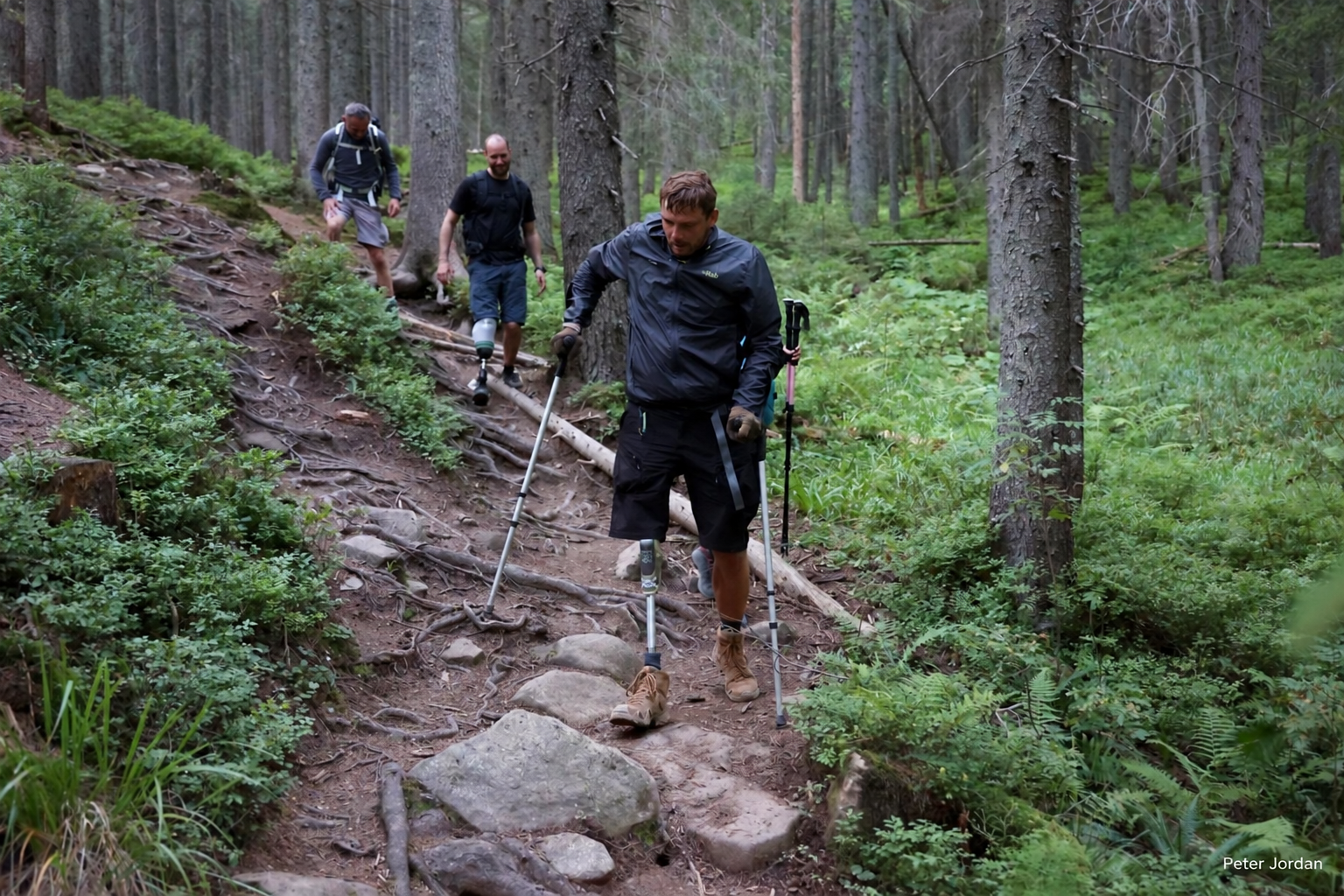
The mountain did not ask what any of us had lost. It asked only what we were prepared to give to the next step.
Carrying Oleg
I carried a flag bearing the name and photograph of Oleksii’s brother, Oleg, who was killed in the war four days after his thirty second birthday. Carrying it transformed the climb. It was no longer simply an act of solidarity with the living, but an act of remembrance for somebody who should have been there.
As a former Royal Marine, that responsibility felt deeply personal. The distance between survival and loss in war is often painfully small. It could easily have been my brother carrying a flag for me. To carry Oleg’s flag in his honour was a service I will not forget.
Resilience is something you do
The experience captured something at the heart of my work with Vanguard Resilience Coaching: resilience is not an abstract idea, nor is philosophy. It is something you do.
It appears in the decision to begin, in the willingness to accept support and in the discipline to focus on the ground immediately in front of you. The mountain strips away theory. Fatigue, uncertainty and discomfort make the present moment unavoidable.
Marcus Aurelius wrote: “Waste no more time talking about what a good man should be. Be one.” On Hoverla, I was surrounded by people doing precisely that: living with courage, honouring those they had lost and refusing to let injury decide what came next.
What Ukraine taught me
Some of the most important moments came away from the climb, when the Ukrainians spoke about the war and its effect on civilian life. They described one way attack drones being used against civilians when no military target had been found, and further drones being directed towards people who came to help after an initial strike. Hearing these accounts directly made the reach of the war feel far wider than the battlefield. Its trauma is being carried by partners, parents and children as well as by those in uniform.
They also explained why occupation is not understood simply as the loss of territory or a change of government. They spoke of a threat to identity, loyalty and the freedom to remain themselves. For them, the choice is not an abstract contest between states. It is deeply personal: freedom or subjugation, and the safety of the people they love.
The depth of that commitment made a profound impression on me. I came home with a renewed appreciation that freedom cannot be treated as a permanent condition requiring nothing from us. The trip inspired in me a personal recommitment to its security and to the responsibility each generation carries for preserving it.
What comes next
I returned home grateful for the friendship and hospitality we were shown, but also with a responsibility to make the climb more than a single occasion. The relationships formed on Hoverla deserve to be carried forward through future mountain days, coaching and practical support for Ukraine’s injured veterans. There is real value in prosthetic users sharing the solutions they have developed around comfort, suspension, hygiene and component choice. That exchange of hard won experience can be as useful as anything taught formally.
I would also like to reciprocate the invitation by bringing the Ukrainian veterans to Britain. Giving them the opportunity to share their experiences with British veterans and serving personnel could deepen the friendship begun in Ukraine and remind others, as it reminded me, that freedom is not something we can simply take for granted. We reached the mountain together. The important work is continuing to move forward together after we have come down.
← Back to the journal